West Manchester Radio Club has received an award, pictured, for the recent museums on the air field day that we all took part in. As per a previous post, I was the first on the radio working GB1TT as GB0PIT on 2m, and proud to be a part of this award along with our other operators for the club.
Category Archives: Operating
operating my amateur radio station M0INI.
West Manchester Radio Club MOTA 2026 Award
Fusion Repeater GB7WM
My own radio club, West Manchester Radio Club, has for the last 6 years operated their own 70cm Fusion digital repeater GB7WM.
Although not digitally equipped myself, I understand it is a popular repeater located in the north west of England. It is possible to connect to the repeater from (and to) further afield using Wires-X over the Internet.
Please visit the clubs website page for how to configure your radio to connect to the repeater and have fun.
Field Day: MOTA 2026
Today I had a very enjoyable day with friends from the West Manchester Radio club at the Lancashire Mining Museum at the former Astley colliery which closed in 1970 celebrating museums on the air.
I am pictured making the first contact using special event call sign GB0PIT to another museum, the GB1TT “Turton Tower” museum, operated by Bolton Wireless Club.
With the sun out, and it being a baking hot day, I even managed a cream tea for my lunch, and an ice cream afterwards. Very enjoyable and reasonably priced too with a coffee included.
Here are some photos of the winding engines and other mining equipment including a rescue winder with an eight cylinder Gardener diesel engine, (I have never seen one before), and that largest winding engine left in existence that is still running…
Friends from West Manchester Radio Club all working as a team to make the event possible…
Learning Morse Code for 2026
When I was learning to fly helicopters, as part of my ground schooling, I had to learn Morse code in order to identify navigational beacons. To be fair, at the time, I was more excited about the hands on flying than I was about the ground school of aviation law, flight planning, yawn, yawn, yawn. So, at the time, I only paid enough attention to Morse in order to identify the navigational beacons around where I was flying, usually in the North West of England, and scrape by in my ground schooling exams.
This was a big mistake on my part, as now many years later, I wish I had studied Morse in more depth, and kept it up because I feel lost when I tune into a station transmitting in the oldest digital mode of our hobby.
New Years Resolution
So, my New Years resolution for 2026, is to re-study Morse code, and to get to a level and be able to hold a QSO at approximately 8 words per minute (beginners level) by the end of the year.
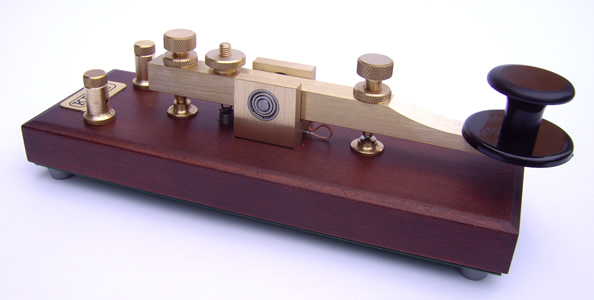
I already have a Kent straight key, similar to this stock photo from the Internet, that I intended to use on my ICOM725, and now I have an ICOM726, it simply plugs in the rear.
Universal Morse Keyer
I also have a universal straight Keyer kit, that I got in the raffle at the West Manchester Radio Clubs Christmas party, so in the New Year, I plan to assemble the kit as part of a Morse project. I think this was sourced by the club secretary Dennis Anderson, so a big thank you.
Anyway, it is New Years Eve, the whisky bottle needs opening, and I need to go and learn the alphabet.
Happy New Year everyone, and lets hope the bands are kind in 2026.
WW2 – US Military Take Up FM
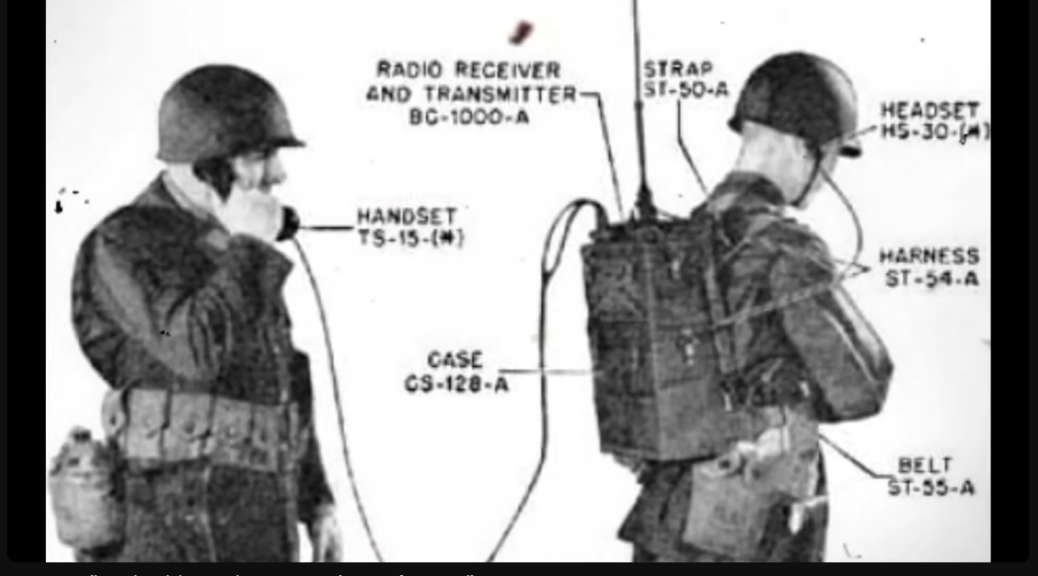
It is interesting that FM was overlooked and the US military wanted to remain on the unreliable AM. In this YouTube video, it sets out the history of FM adoption by the US military during world war 2…
How One Radio Engineer’s ‘ILLEGAL’ Frequency Hack Gave Infantry 3-Mile Range
None of this is my work, it was a very entertaining and interesting piece of FM history by the WWII Rising Stories channel.
More information on Wikipedia…
Portable Mast Base
I have wanted for a little while a heavy duty drive on mast base that could take the stresses of a large mast plus a large vertical antenna (or antennas) bolted to the top.
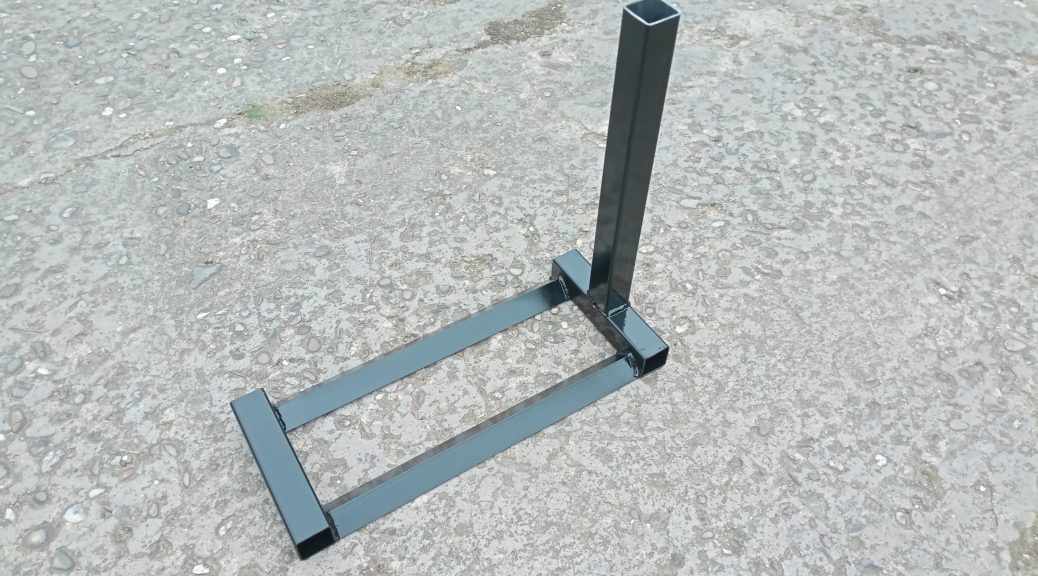
I ordered up a section of 50mm box section and 40mm angle iron, both 1m long and 3mm thick, all over engineered. I cut the angle iron into two 500mm lengths, and the box into two 250mm lengths and a single 500mm length.
Taking the two 500mm angle iron lengths and the two 250mm lengths, I arranged them into a square, and tacked them into place with the MIG welder. The internal measurements of the “square” needs to have between 225mm and 240mm between the angle iron sides for the wheel to be able to drive on and the weight of vehicle hold the base in position. My car (and van) needed 235mm. This fits very nicely with the 250mm box section sides. In double checking they were square and of the correct gap, I then welded them properly on both the top and bottom.
This left a single length of 500mm box section left over. This is to form the vertical receiver that the mast will slot into. This was then tack welded into position and checked that it was indeed 90 degree perpendicular to the “base square”. Then the joints were welded properly.
UPDATE EDIT: If you have a 16 inch or 17inch wheel, you may be better off cutting the “end plate box sections” to be 300mm each. This will of course reduce your upright by only 100mm to 400mm. A 500mm upright section may be too long for some people, so this alteration of measurements for a larger wheel may be for you and make the plate easier to stow when not in use.
Lastly a small hole was drilled by my bench pillar drill in order to allow any rain water that may run down the mast to escape.
The whole fabrication took a couple of hours, and spray painted in black Smoothrite paint.
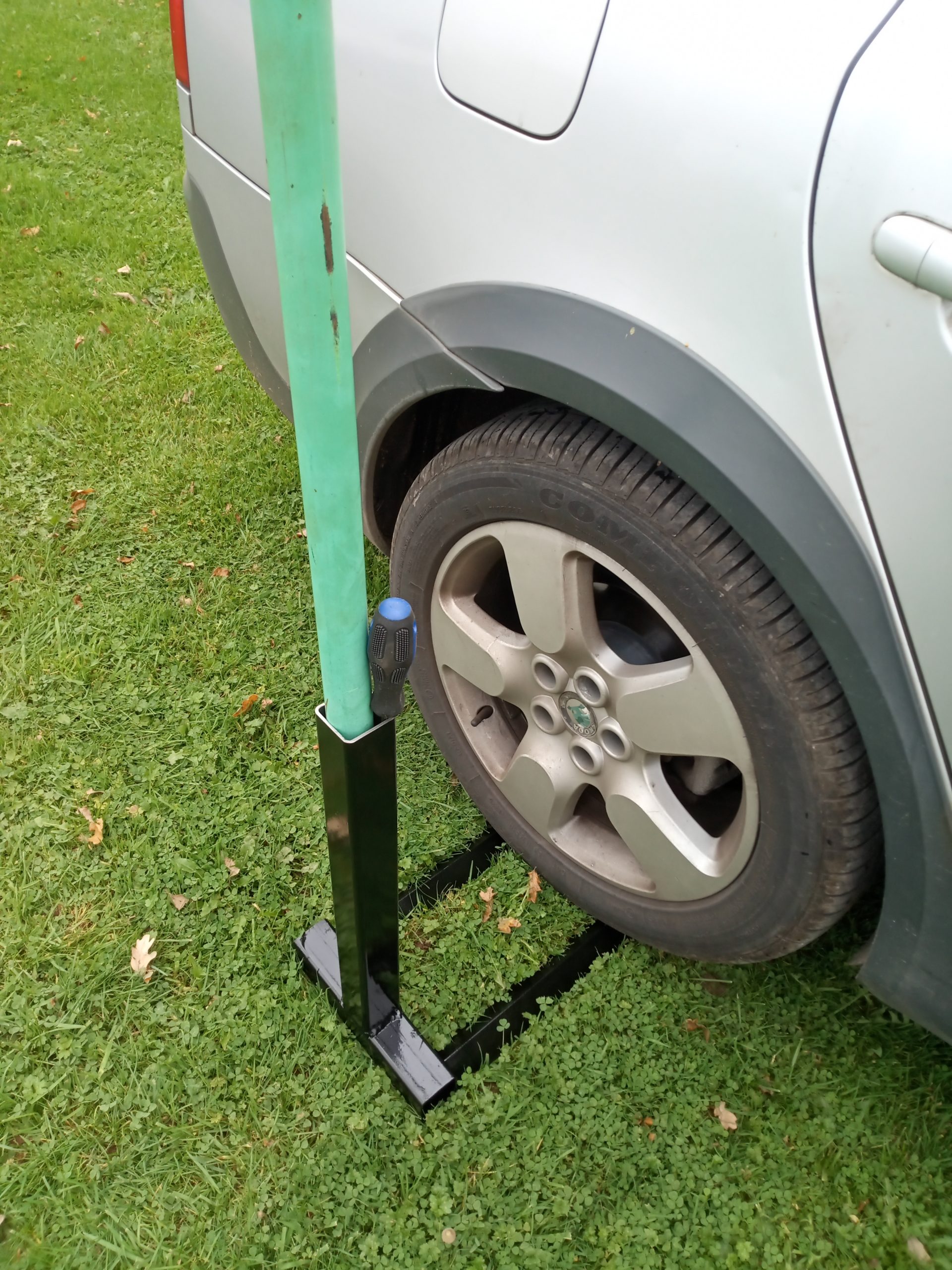
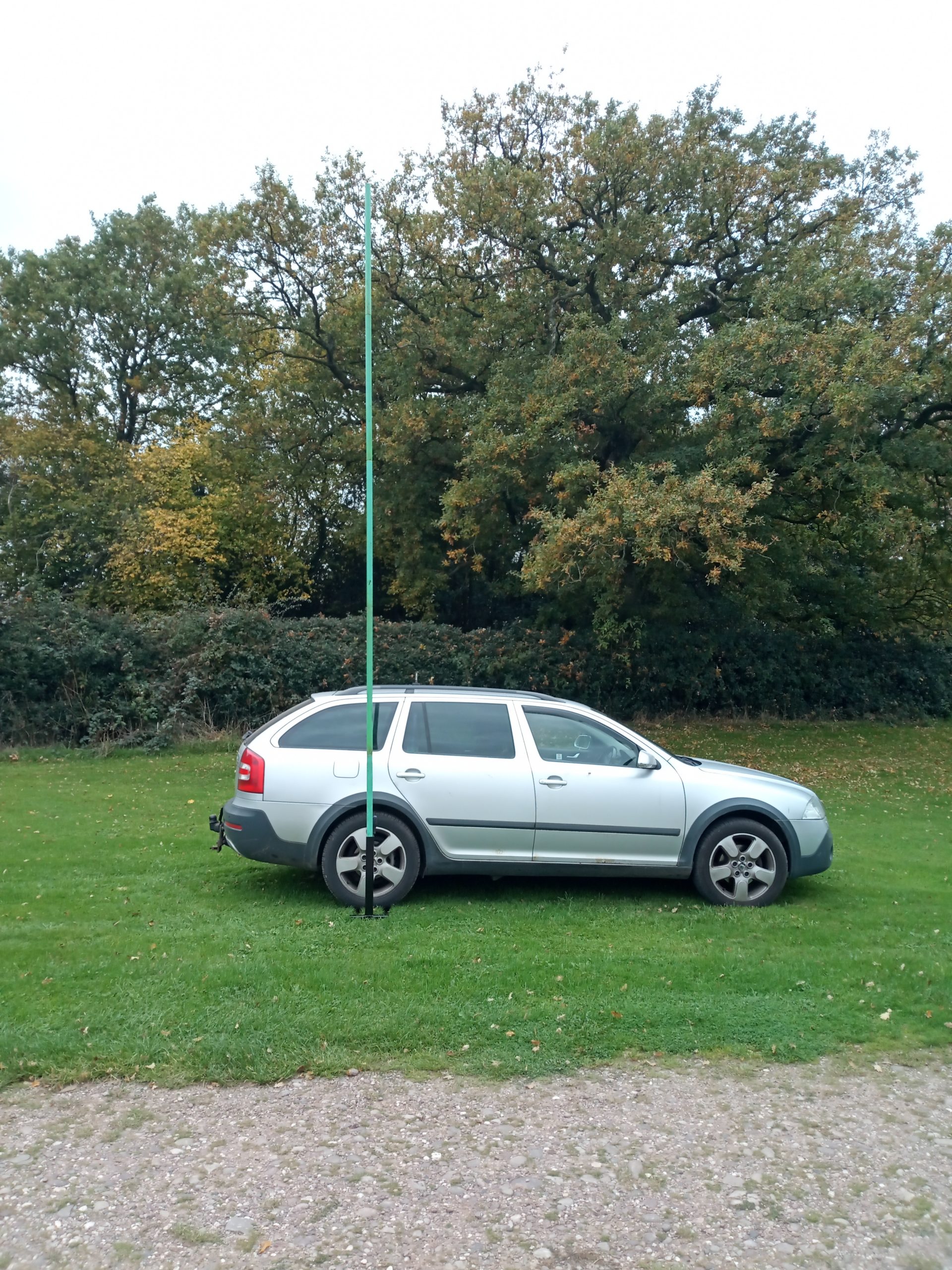
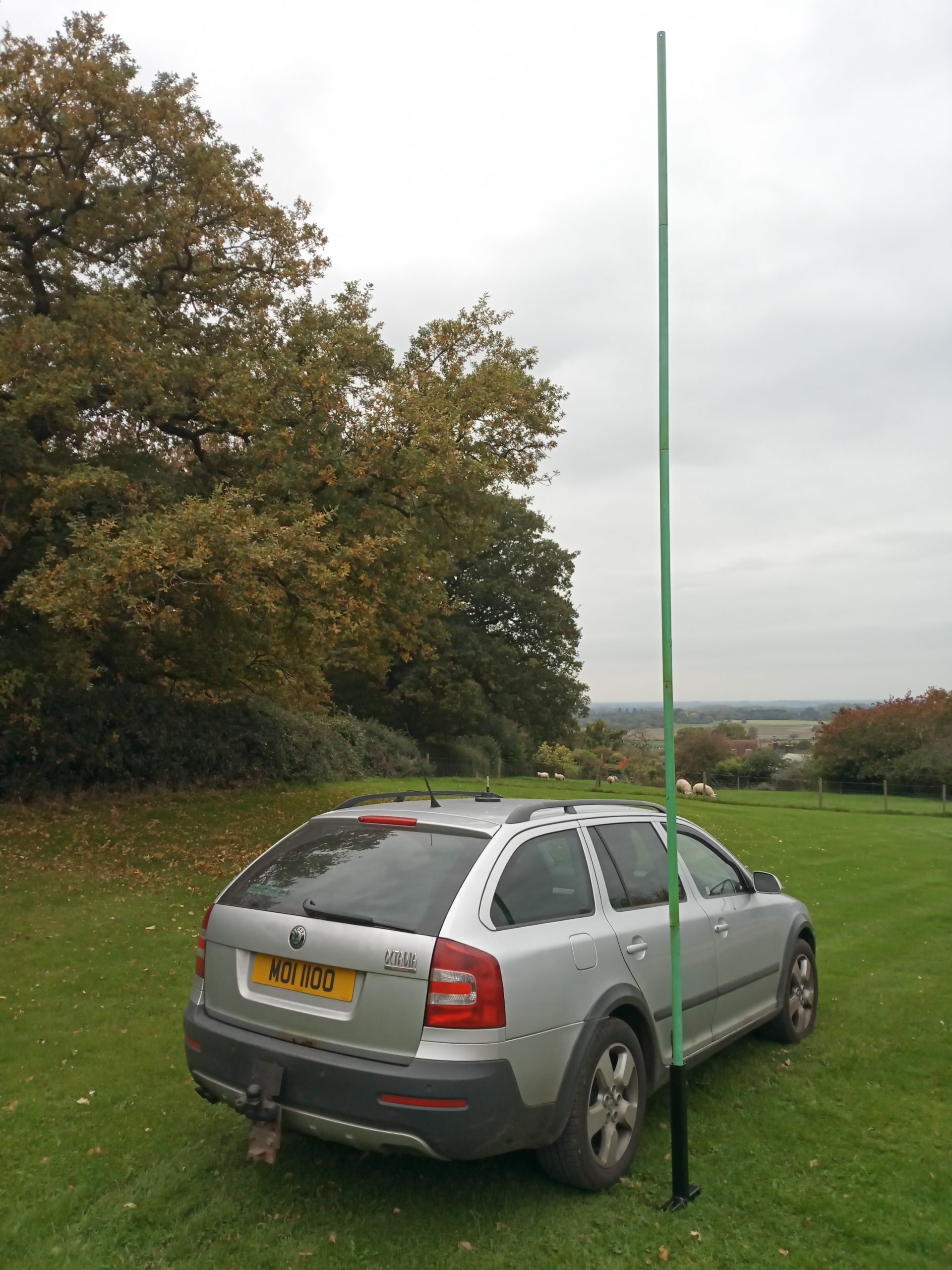
To allow for unlevel ground, and to allow the mast to remain vertical, a test was set up on slightly sloping ground, and a simple solution of a screwdriver wedge allows some adjustment.
Interestingly, the base actually is sufficient to act as a wheel chock to my estate car. In testing, the car handbrake was released and the base held the car in position on this slight slope.
Here I have repurposed a child’s swing’s green legs to make a 40mm “sectional pipe” mast of 2mm walls. This extends about 3.75m above the car in 1m sectional lengths (the top section being shorter). Now to decide what antenna to fit to the top. I am thinking of one of those 80m to 6m multi band verticals that can be assembled in sections to go with this sectional portable mast.
JOTA 2025 Scouts Jamboree On The Air
This years Scouting jamboree on the air will be held from Friday 17th to Sunday 19th October 2025. I do hope the bands are favourable and that everyone can link up, make contacts and have a good time.
I doubt I can assist this year, but, I know my own club, West Manchester Radio Club, is helping the 1st Atherton Scout Group to get on the air.
ICOM 726
As you know, my classic rig, my ICOM 725 failed quite some time ago, and it turned out that the square chip behind the display gave off some smoke. Since parts were not available, I have missed operating my classic ICOM 725.
Replacement ICOM 725
The search for another ICOM 725 started with an eBay search and a reminder being set up should one come up for sale. I would even accept a “parts donor” rig, that would allow me to get either one working such was the fun and nostalgia I have had operating my classic rig.
Unfortunately, everything that came up, was at top bat price for a very average rig. There were no “parts donors” that came available.
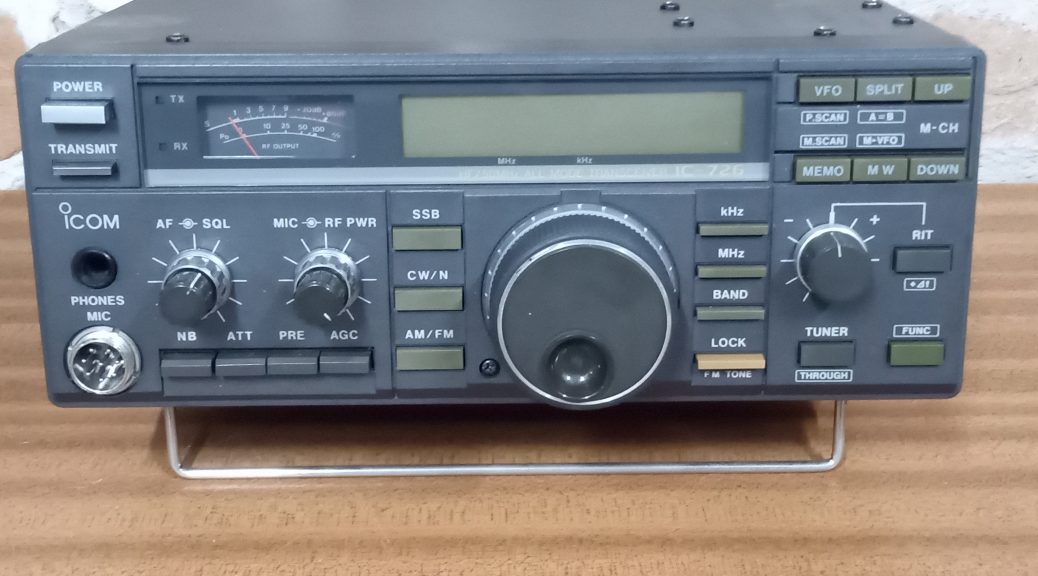
So, I widened my search to include the ICOM 726, a very similar rig that also includes the 6 metre band. I have never transmitted on 6 metres nor 4 metres, so this may be an option should one become available.
After 18 months, the only 725 I saw was a very expensive average condition one, and for 726’s, two, both expensive and in Japan..!
Mint condition ICOM 726
Well last week, Graham M3XXG, posted to eBay a mint condition ICOM 726, and I was very interested. The price was a little high, but, for the condition, and the fact that it was been well kept drew my attention.
After making contact via eBay, I decided to purchase the rig, and drove over to Graham’s QTH to collect. The rig has a very nice receive, and we put out some calls on 40 metres, but it was a very busy pile up. Hay oh, such are the bands sometimes.
So, the 726 is now back in my shack, replacing the failed 725. I am very pleased with my purchase, and hope to operate it mobile some day as well.
Thank You
A big thank you to Graham, M3XXG, for selling me the rig and for keeping it in such a nice condition. I certainly will keep it in good condition during my ownership.

Cornwall 2025
I took the bold step not to bring any amateur radios with me on holiday this year, and only pack CB’s instead. As you know, I love all types of radio and choosing CB for my holidays was a change.
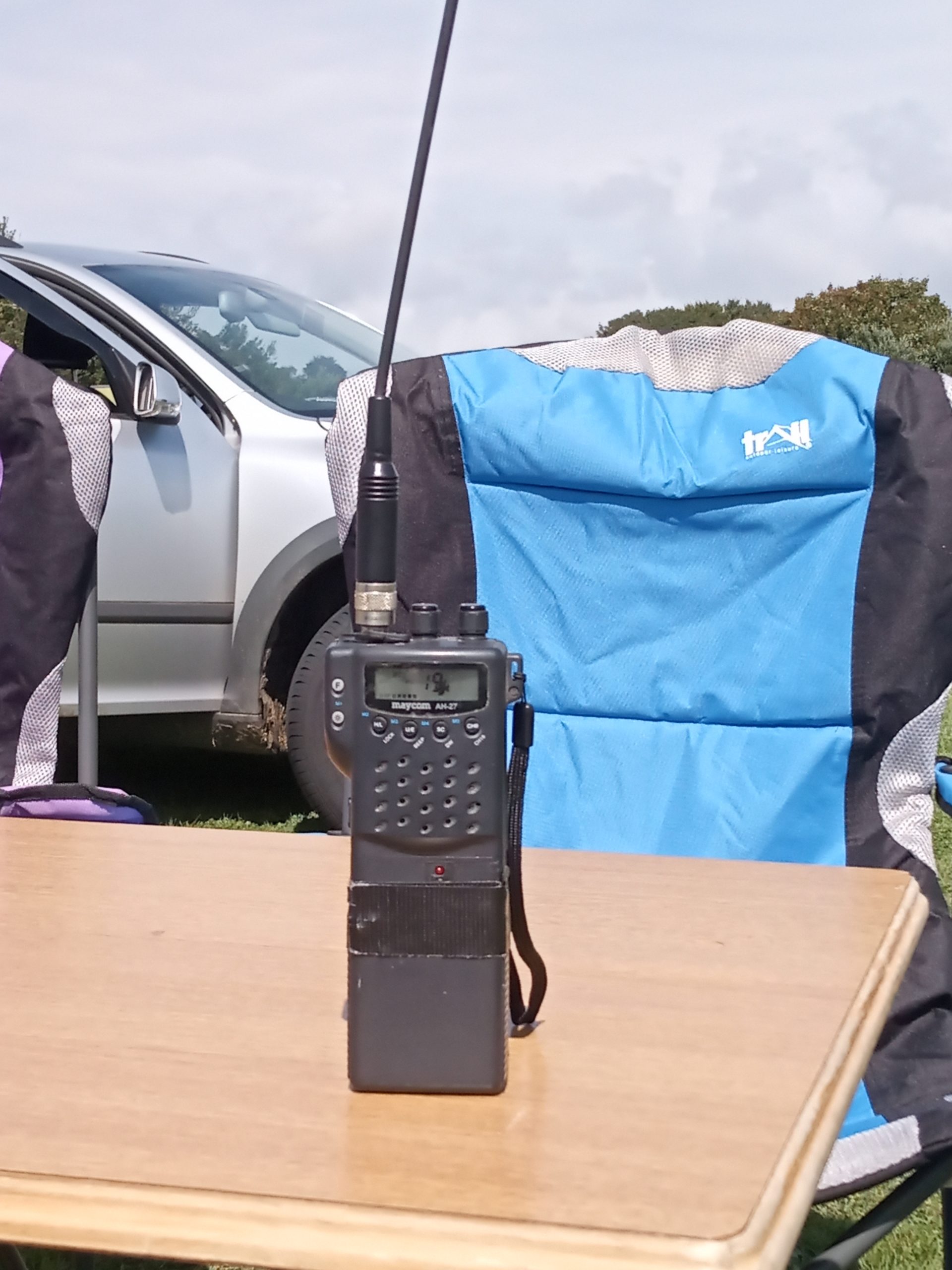
I have with me my Harvard “Good Buddy” on UK FM only, and a pair of Maycom AH-27 handhelds.
CB Radios Are Useful
When travelling and towing, some of the service area car parks for vehicles towing trailers, boats and caravans can be busy, and sometimes frankly a free for all. Asking Mrs M0INI/XYL to pop out with a handheld CB certainly assists with any reversing blind spots. We usually use channel 33 or 36 on UK FM for this.
Walking the handheld
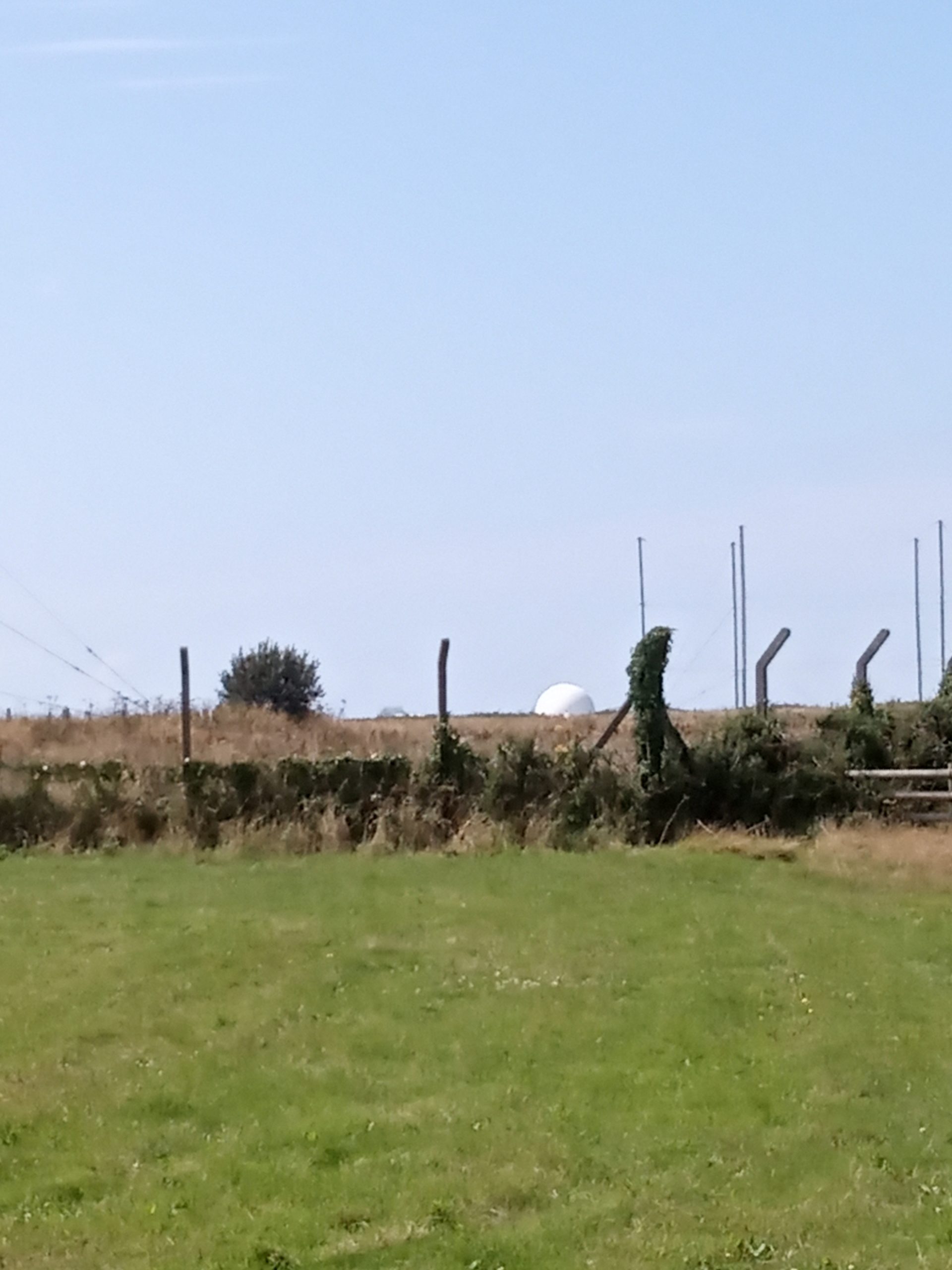
Where we are camped, at Cambrose Touring Park, is very close to RAF Portreath, the remote RAF listening post on the north Cornish peninsular.
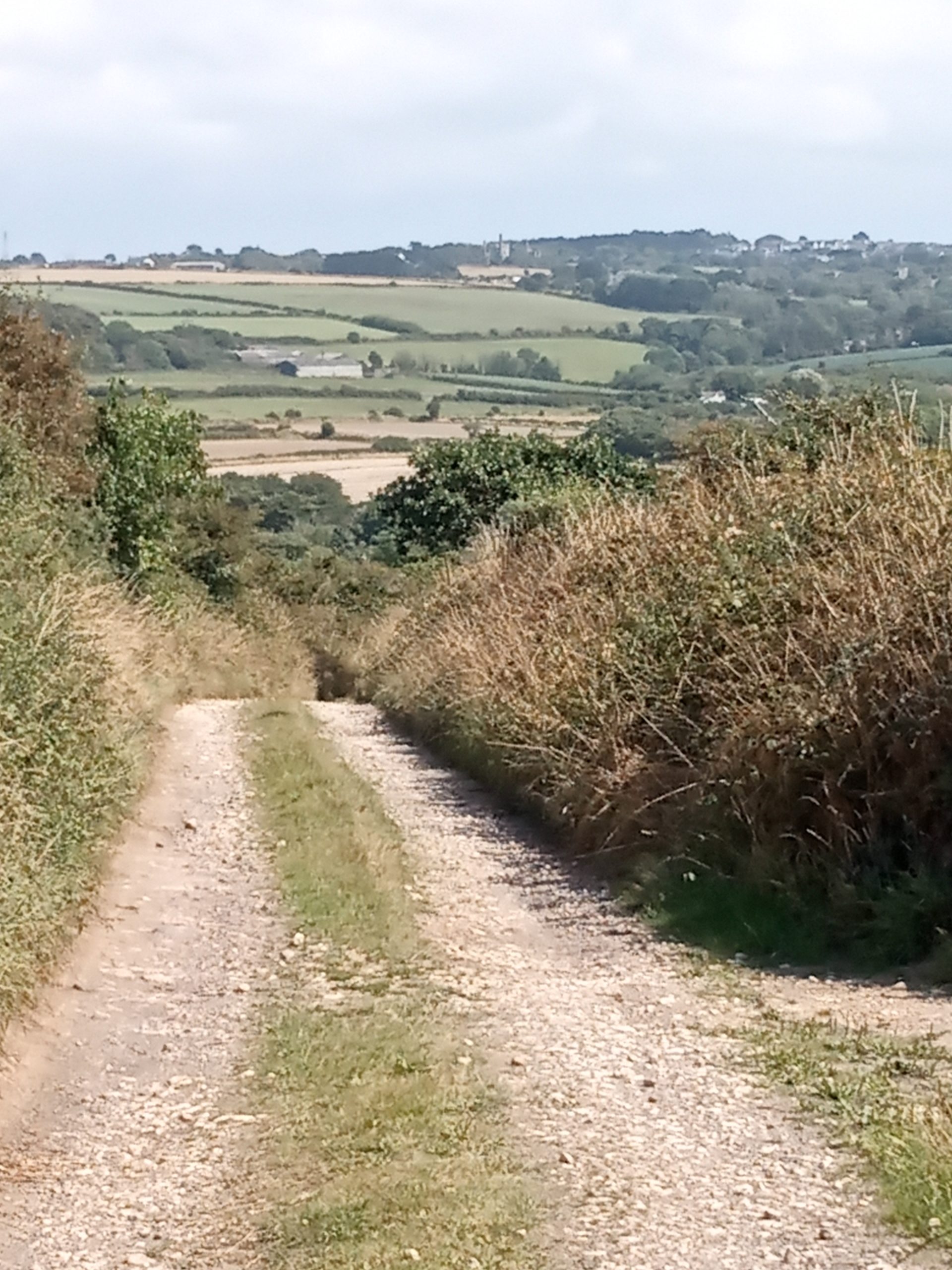
So today, in the blisteringly hot Cornish sunshine, I put on my boots, and went for a hike with a Maycom AH-27. Does this make it a “walkie talkie”? LOL – sorry for that..!
RAF Portreath
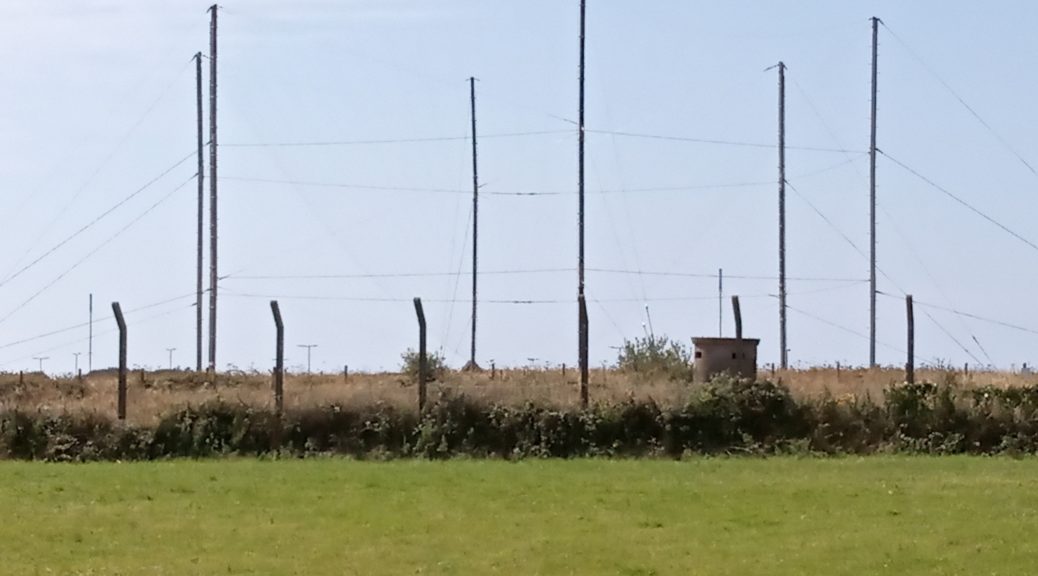
Anyway, at the summit of the hill, I could see the very impressive antenna array of RAF Portreath and a snow white radar golf ball in the distance.
As we are so high up, I can see why the RAF chose this location as a remote early warning listening station. The take off for transmitting and receiving even with a handheld CB is excellent.
I plan to return another day with fresh batteries and see if I can make some European contacts as 26TM998/M.