For those going to the National Ham Fest 2026 on the 25th and 26th September 2026 in Newark (Nottinghamshire), here is a layout of the hall along with the trade stands, (click to enlarge)…


For those going to the National Ham Fest 2026 on the 25th and 26th September 2026 in Newark (Nottinghamshire), here is a layout of the hall along with the trade stands, (click to enlarge)…
A little bit of a catch up on what I have been up to during July. I have been doing something sort of radio related, well at least it uses my radio mast and antenna base, albeit more Internet data related.
When my family like to go camping, (or caravanning), one of our requirements is that I can access the Internet in order to support all my business interests. As many will know, some campsites are in idyllic areas, but, have sketchy 4G Internet access, some campsites do provide a shared WiFi access, which can be over subscribed and won’t support a stable remote desktop session over a VPN in order to work and support my IT businesses in real time.

The solution is to use a Pro Route M2M industrial router. These are like a home router on steroids, and way more rugged and programmable. I have owned this one for about 8 years, and is very reliable and works a treat. This type of router allows you to program it to ignore 3G connections, and with external antennas, the ability to connect to distant 4G networks further afield. High gain external antennas are necessary in order to maintain a stable connection to the distant mobile phone mast.
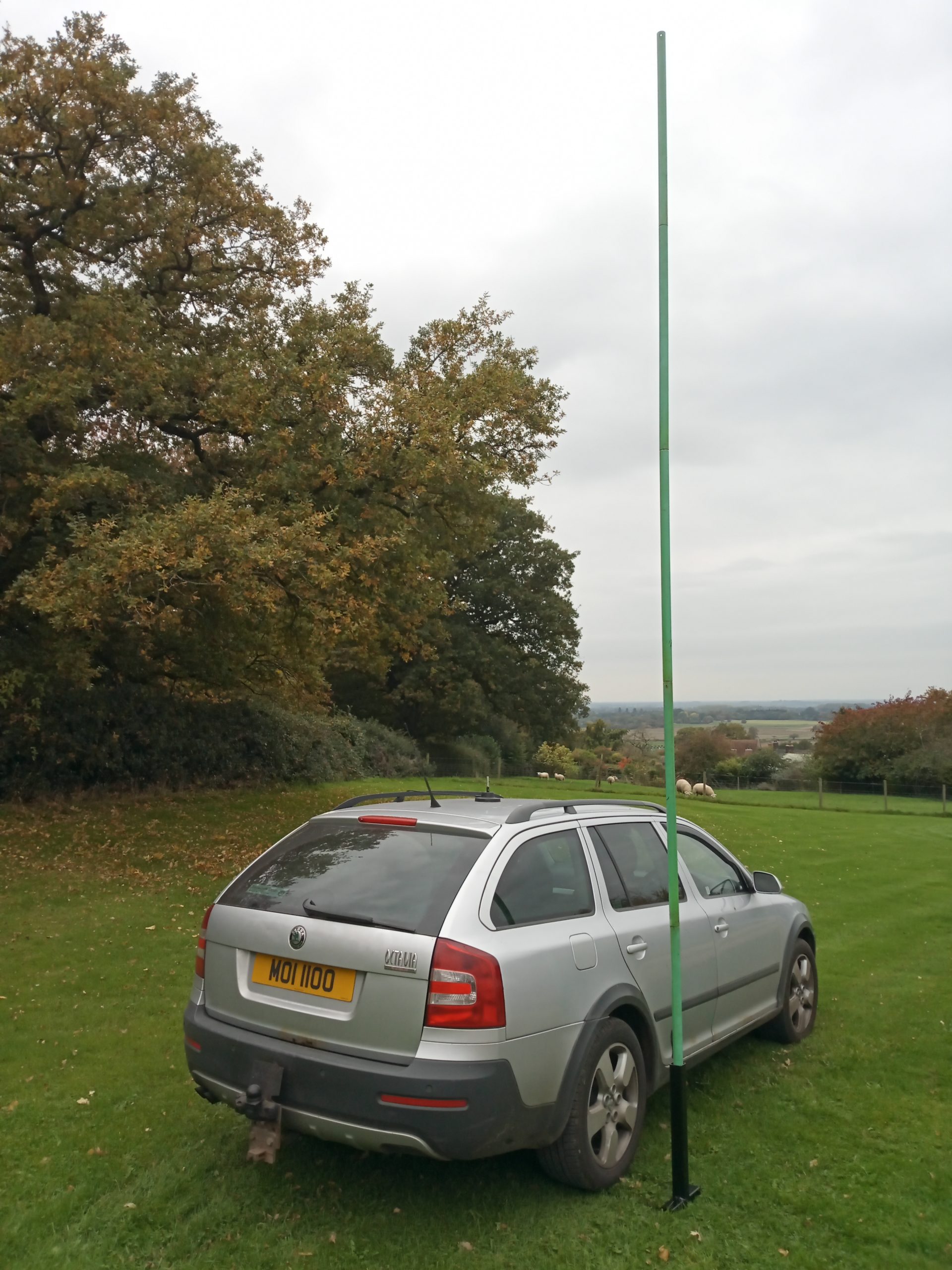
So, if I have owned this for 8 years, what is new you may ask. My solution, is to stick the Pro Route M2M unit on a pole inside a black box. Using one of my excellent drive on mast bases, and a sectional mast that slots together. At the mast head, there is a new “T” piece to support the two high gain 11dB 4G antennas from Unite Com. These need to be kept a meter apart because the M2M unit will use them both to see which is the better signal path, and additionally use the two antennas as a phase array to reconstruct a poor distant signal. The antennas are a high gain marine solution used for ship to shore inside territorial waters. Have you ever had a bad mobile phone telephone call and moved a few steps for the signal to clear up. Well the mast can’t move a few steps, and this is the reasoning behind the dual antennas.
This unit has WiFi, so simply needs to be fed with 12volts, and around our camp announces the WiFi network of “Colin”, the name of our caravan, and can be accessed with a usual WiFi password. This is the little down facing rubber duck antenna. However, we have found M2M units can run hot, really hot, and using a thermal imaging camera, I saw three hotspots, albeit two were milder, but, I added three stick on copper cooling fins, just to help with longevity of the unit.
Even though the Pro Route router has WiFi, the eagle eyed will notice that I have an additional LAN port fed with a red LAN cable. This is so I can optionally plug a laptop in for programming, or if necessary turn my kids WiFi connection off if I need to take priority over the Internet connection.
Even though this router has the capability of being able to VPN to another network, in case it ever was stolen, this is not used. Instead all of our laptops use SoftEther VPN to establish a secure and compressed connection “back to the office”.
I have tried a few of the mobile phone networks in the UK, and the one I find to work the best appears to be the O2 network, although this might be because of where I like to holiday. Interestingly using a GiffGaff SIM (which uses the O2 network) on the unlimited data tariff on a rolling monthly contract works the best for us as a family, as well as me for my work supporting commitments.
So, overall, a nice little constructing project this month in pulling all this together into a single package that can be packed away and used when camping. Should I need to use an amateur antenna, this “T” piece can be unbolted by releasing the two nuts at the centre of the “T” and the black box and “T” with both antennas comes away from the mast head as one complete piece. The antennas unscrew from the ends of the “T” for ease of transporting.

West Manchester Radio Club has received an award, pictured, for the recent museums on the air field day that we all took part in. As per a previous post, I was the first on the radio working GB1TT as GB0PIT on 2m, and proud to be a part of this award along with our other operators for the club.

My own radio club, West Manchester Radio Club, has for the last 6 years operated their own 70cm Fusion digital repeater GB7WM.
Although not digitally equipped myself, I understand it is a popular repeater located in the north west of England. It is possible to connect to the repeater from (and to) further afield using Wires-X over the Internet.
Please visit the clubs website page for how to configure your radio to connect to the repeater and have fun.

This years summer Red Rose Rally will be on Sunday 16th August 2026 from 10am until 2pm at Mather Hall, Leigh, WN7 2PR. For more information on the Red Rose rally, please see the West Manchester Radio Clubs website.
Unfortunately, I will be travelling back from my summer holidays on Cornwall that day, so will sadly miss my own clubs summer rally.
Today I had a very enjoyable day with friends from the West Manchester Radio club at the Lancashire Mining Museum at the former Astley colliery which closed in 1970 celebrating museums on the air.
I am pictured making the first contact using special event call sign GB0PIT to another museum, the GB1TT “Turton Tower” museum, operated by Bolton Wireless Club.

With the sun out, and it being a baking hot day, I even managed a cream tea for my lunch, and an ice cream afterwards. Very enjoyable and reasonably priced too with a coffee included.
Here are some photos of the winding engines and other mining equipment including a rescue winder with an eight cylinder Gardener diesel engine, (I have never seen one before), and that largest winding engine left in existence that is still running…


Friends from West Manchester Radio Club all working as a team to make the event possible…


In previous years, as you all well know, I have been involved with the Scouts JOTA, however, I have never been involved in a MOTA (Museums On The Air). Given my late father’s background working for a company servicing mine equipment, it was about time I got involved with a coal pit museum.
MOTA, this year will be held on two weekends in June, the Saturday 20th and Sunday 21st June, and also Saturday 27th and Sunday 28th June 2026. Link to the RSGB website.
My own radio club, the West Manchester Radio Club, each year activate the Lancashire Mining Museum at the old Astley pit, just off the A580 East Lancashire road, and operating with the special event call sign GB0PIT.
As a club we have six members operating two radios, HF, and VHF/UHF. Radios and antennas yet to be decided.
Due to other family commitments, I can only get involved in one date, Saturday 20th June, which I am looking forward to next month.
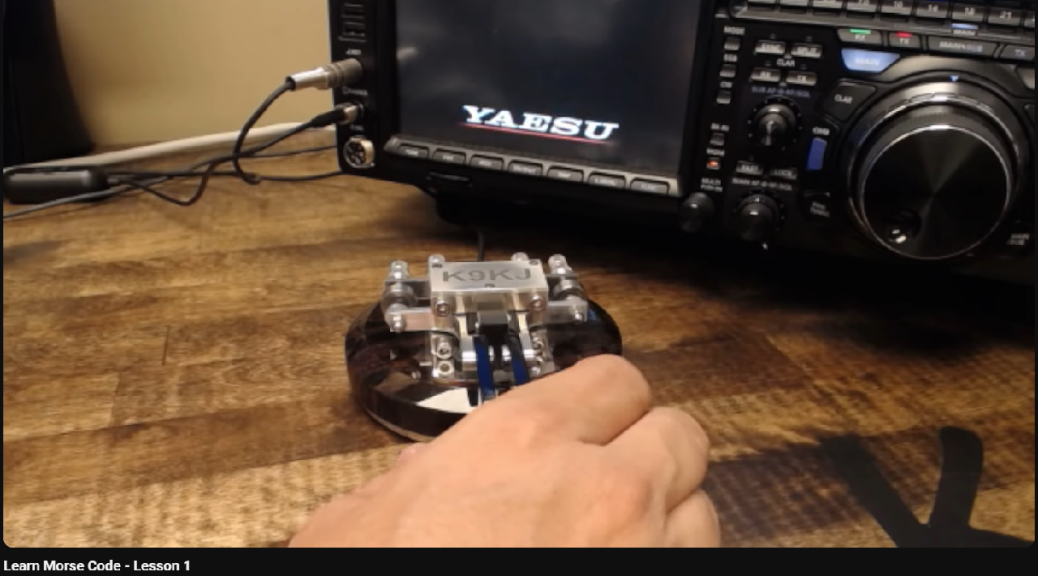
As you know, I want to improve my Morse in order to be able to send and receive at initially 8 words per minute, and later 12 words per minute.
I have been studying the following lessons by Thomas K9KJ on You Tube, as I find that the learning speed is about what I require. Here is a link to his channel and first lesson…
I plan to do one lesson per week, so not to over tax my brain, and occasionally repeating a week. I will let you know how I get on.
Mark.
When I was learning to fly helicopters, as part of my ground schooling, I had to learn Morse code in order to identify navigational beacons. To be fair, at the time, I was more excited about the hands on flying than I was about the ground school of aviation law, flight planning, yawn, yawn, yawn. So, at the time, I only paid enough attention to Morse in order to identify the navigational beacons around where I was flying, usually in the North West of England, and scrape by in my ground schooling exams.
This was a big mistake on my part, as now many years later, I wish I had studied Morse in more depth, and kept it up because I feel lost when I tune into a station transmitting in the oldest digital mode of our hobby.
So, my New Years resolution for 2026, is to re-study Morse code, and to get to a level and be able to hold a QSO at approximately 8 words per minute (beginners level) by the end of the year.
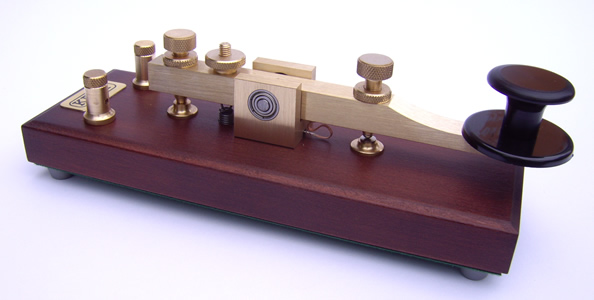
I already have a Kent straight key, similar to this stock photo from the Internet, that I intended to use on my ICOM725, and now I have an ICOM726, it simply plugs in the rear.
I also have a universal straight Keyer kit, that I got in the raffle at the West Manchester Radio Clubs Christmas party, so in the New Year, I plan to assemble the kit as part of a Morse project. I think this was sourced by the club secretary Dennis Anderson, so a big thank you.
Anyway, it is New Years Eve, the whisky bottle needs opening, and I need to go and learn the alphabet.
Happy New Year everyone, and lets hope the bands are kind in 2026.
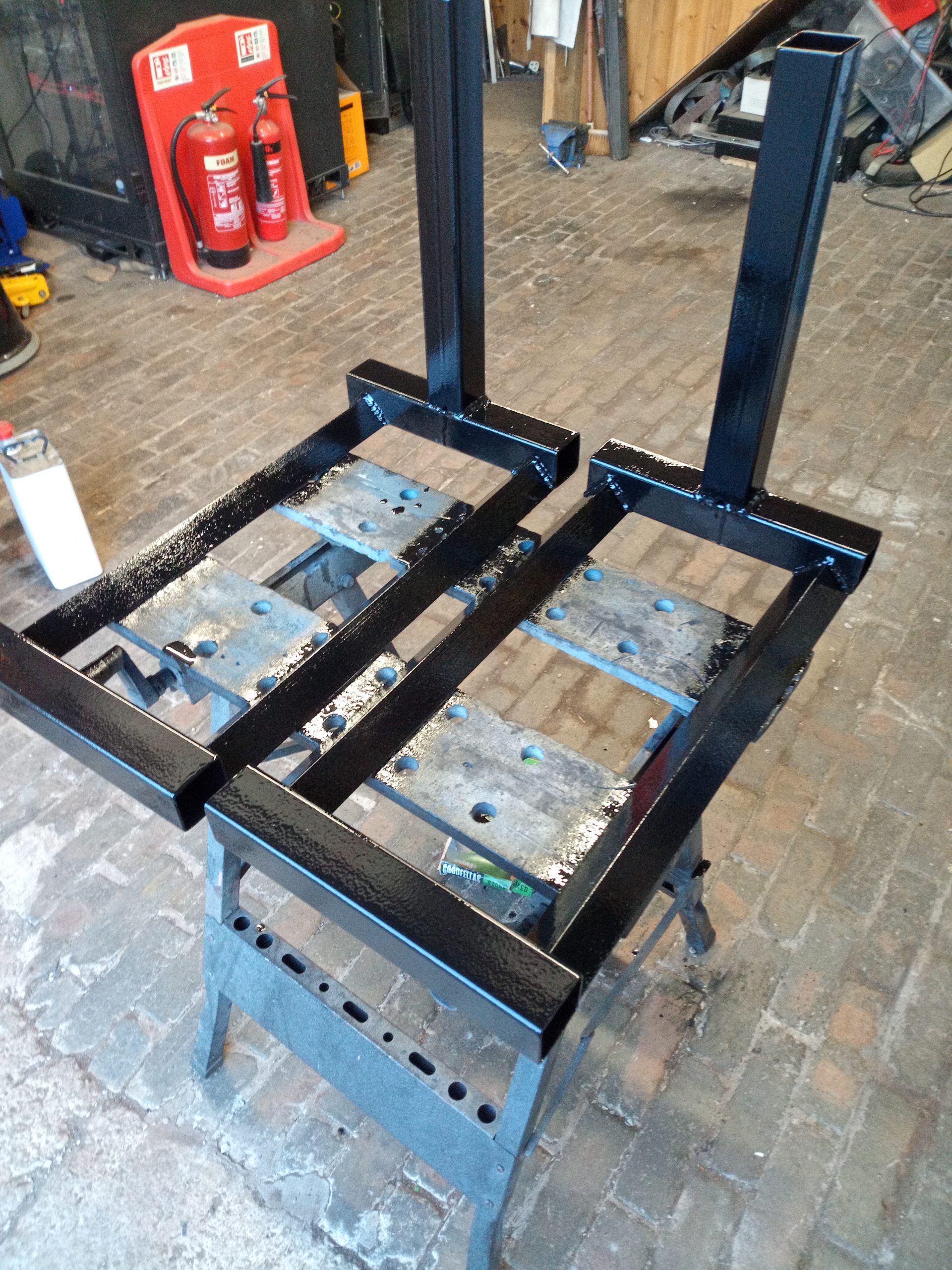
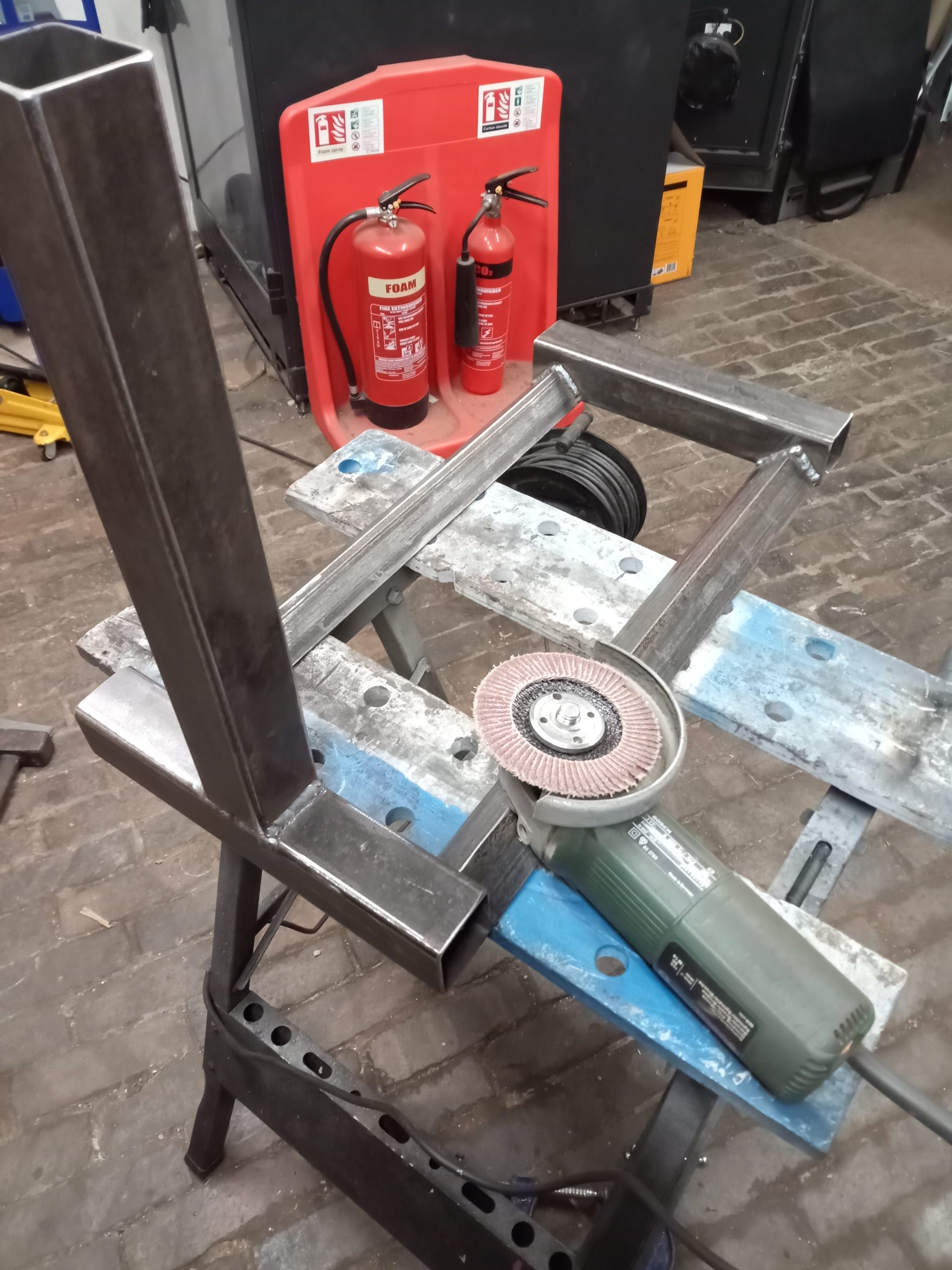
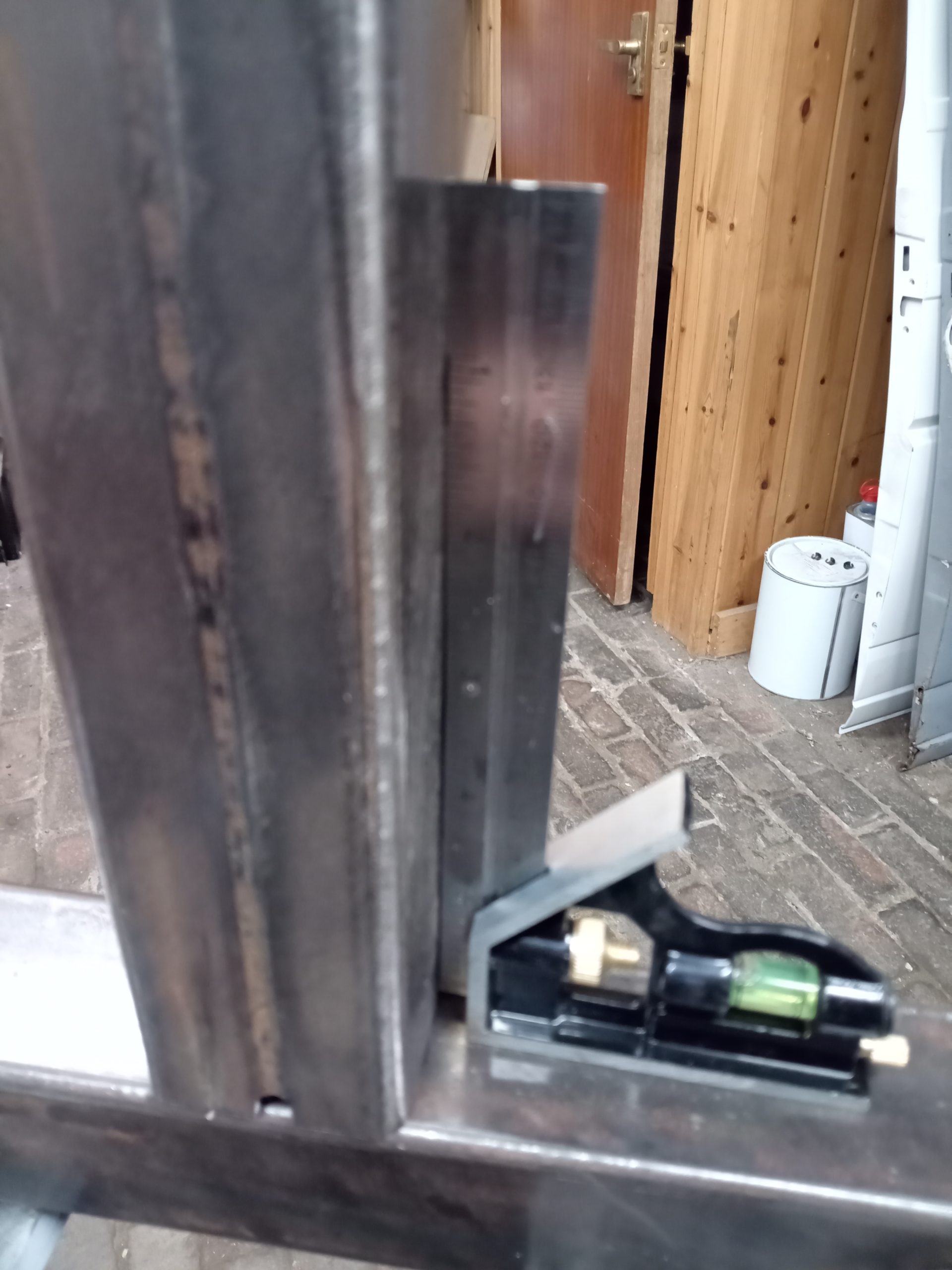
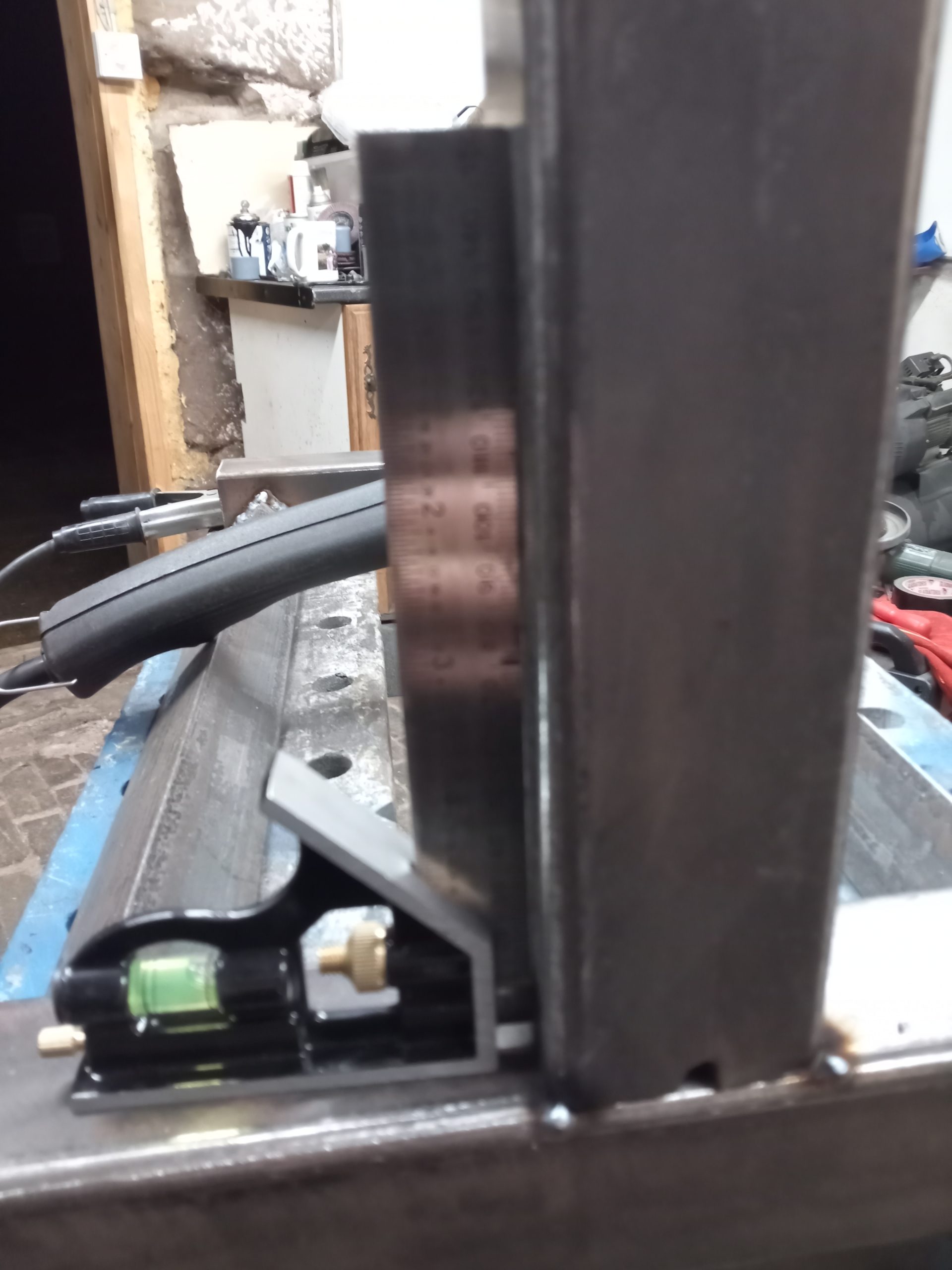
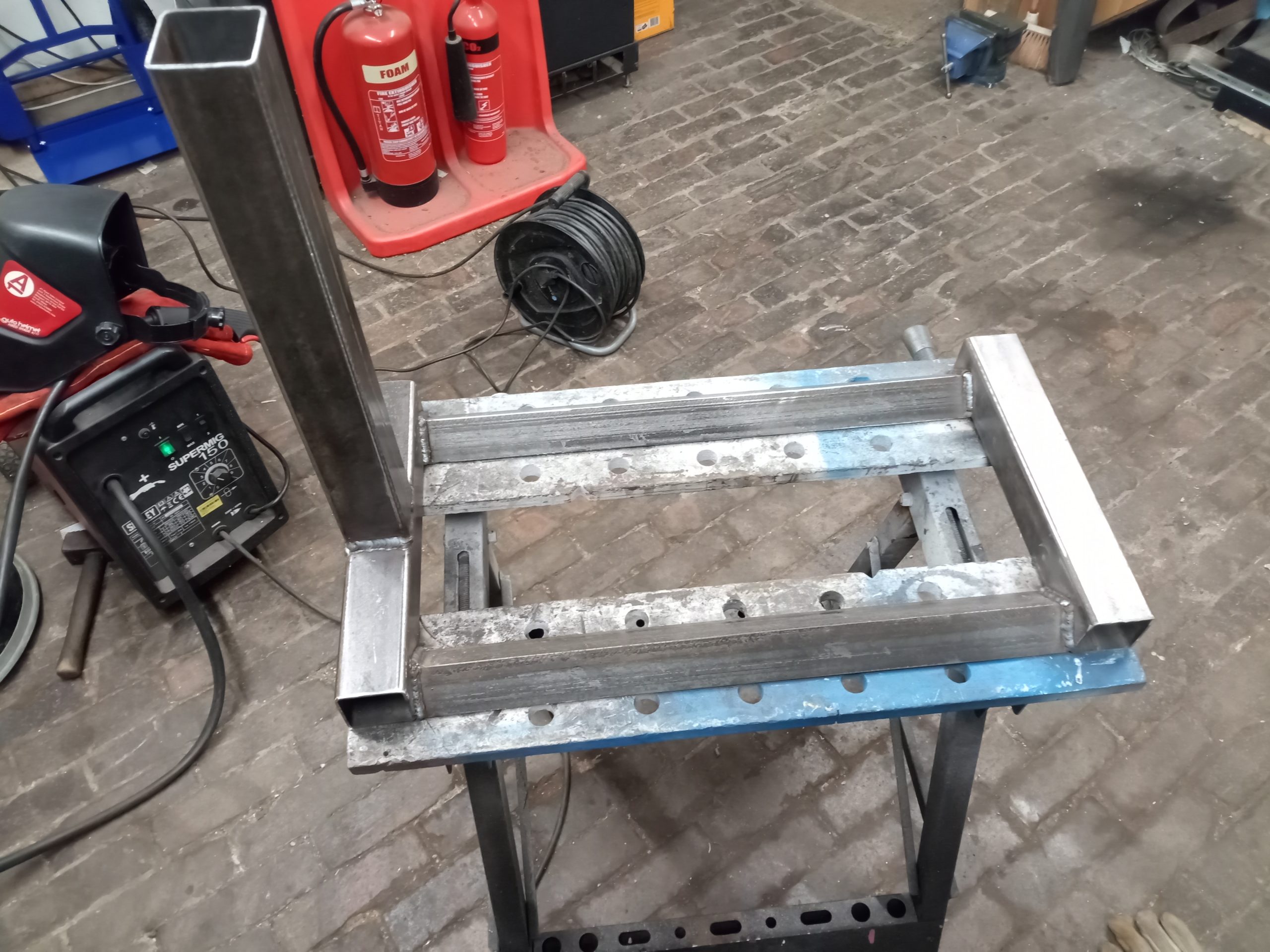
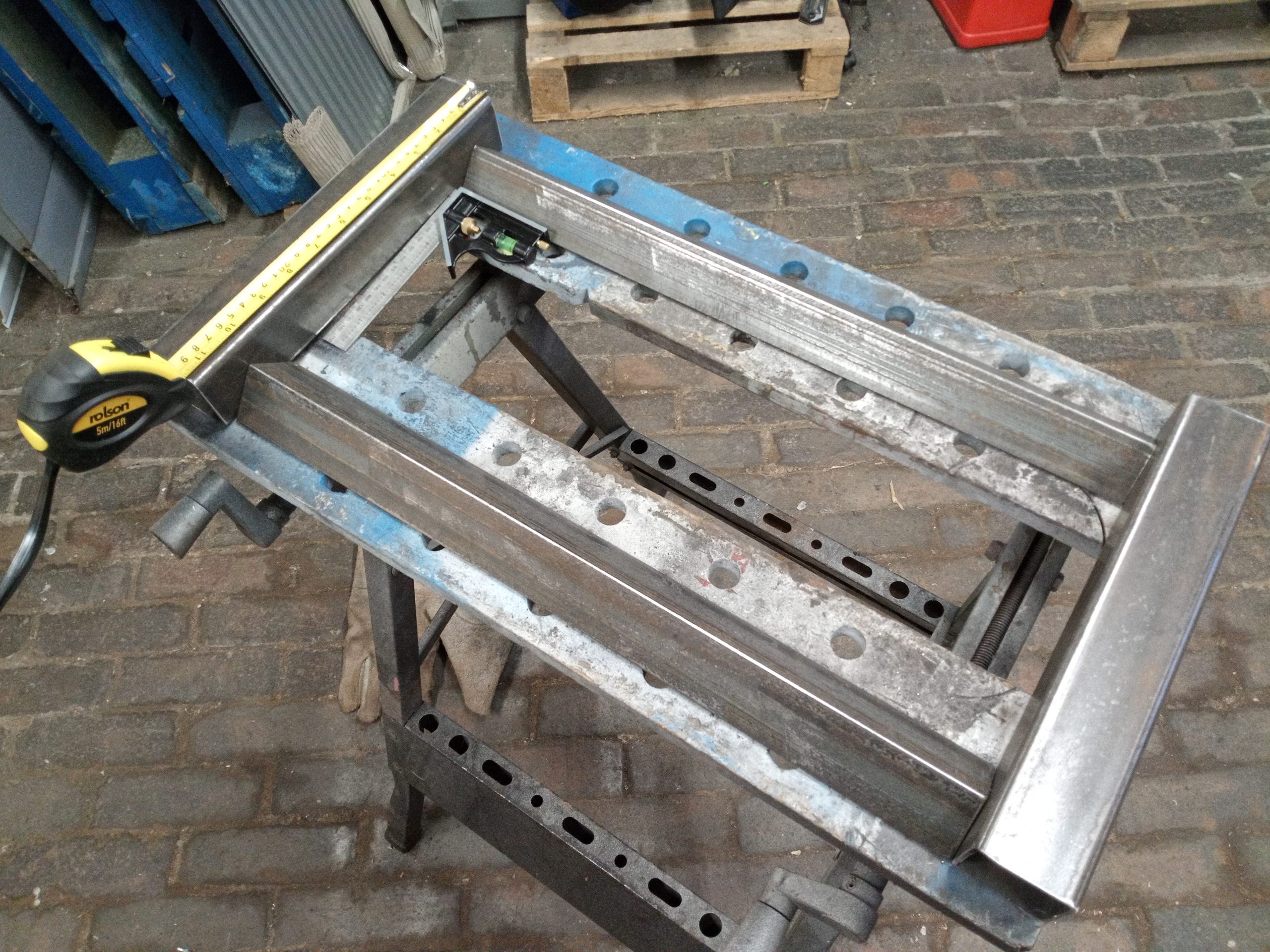
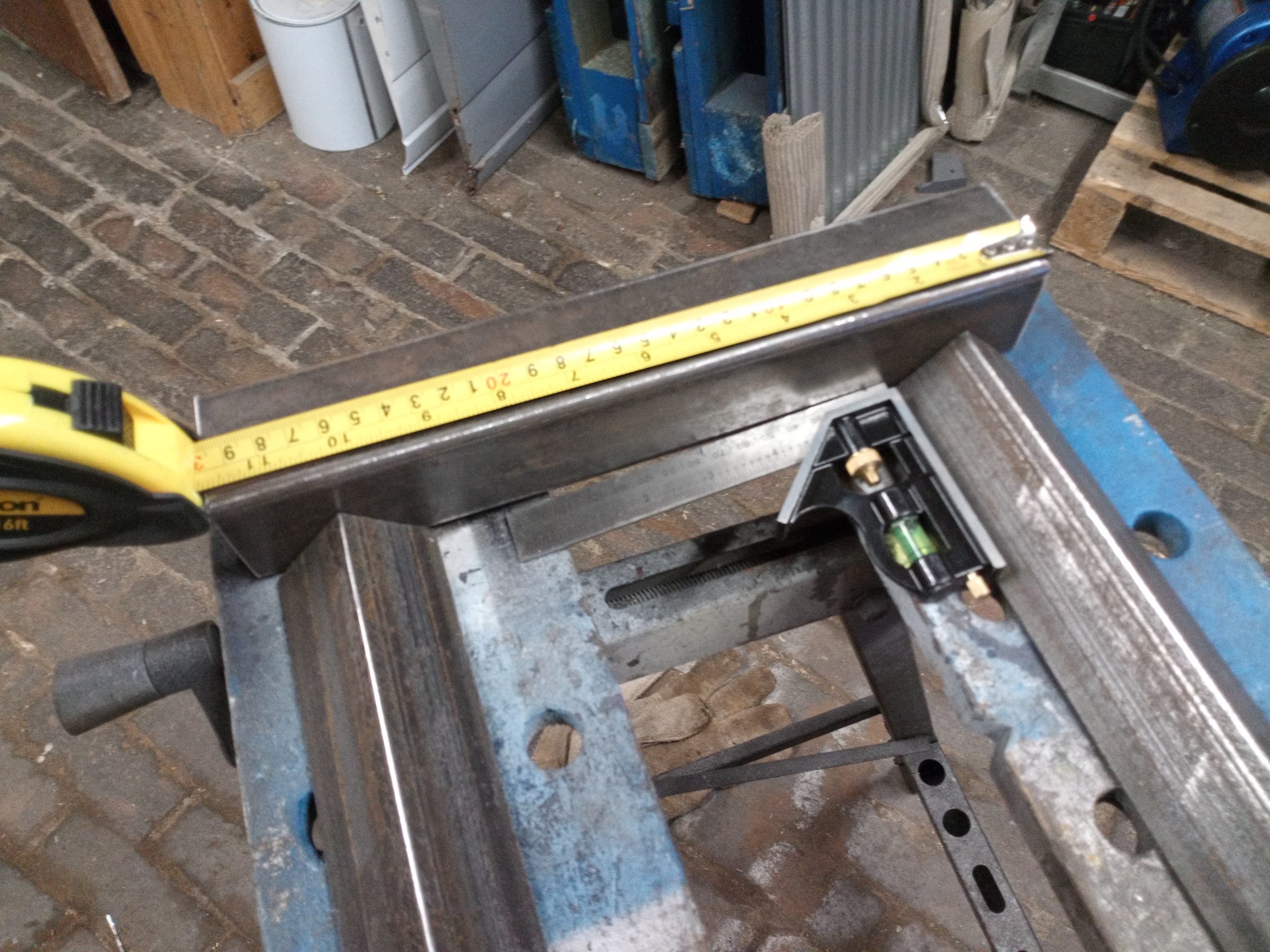
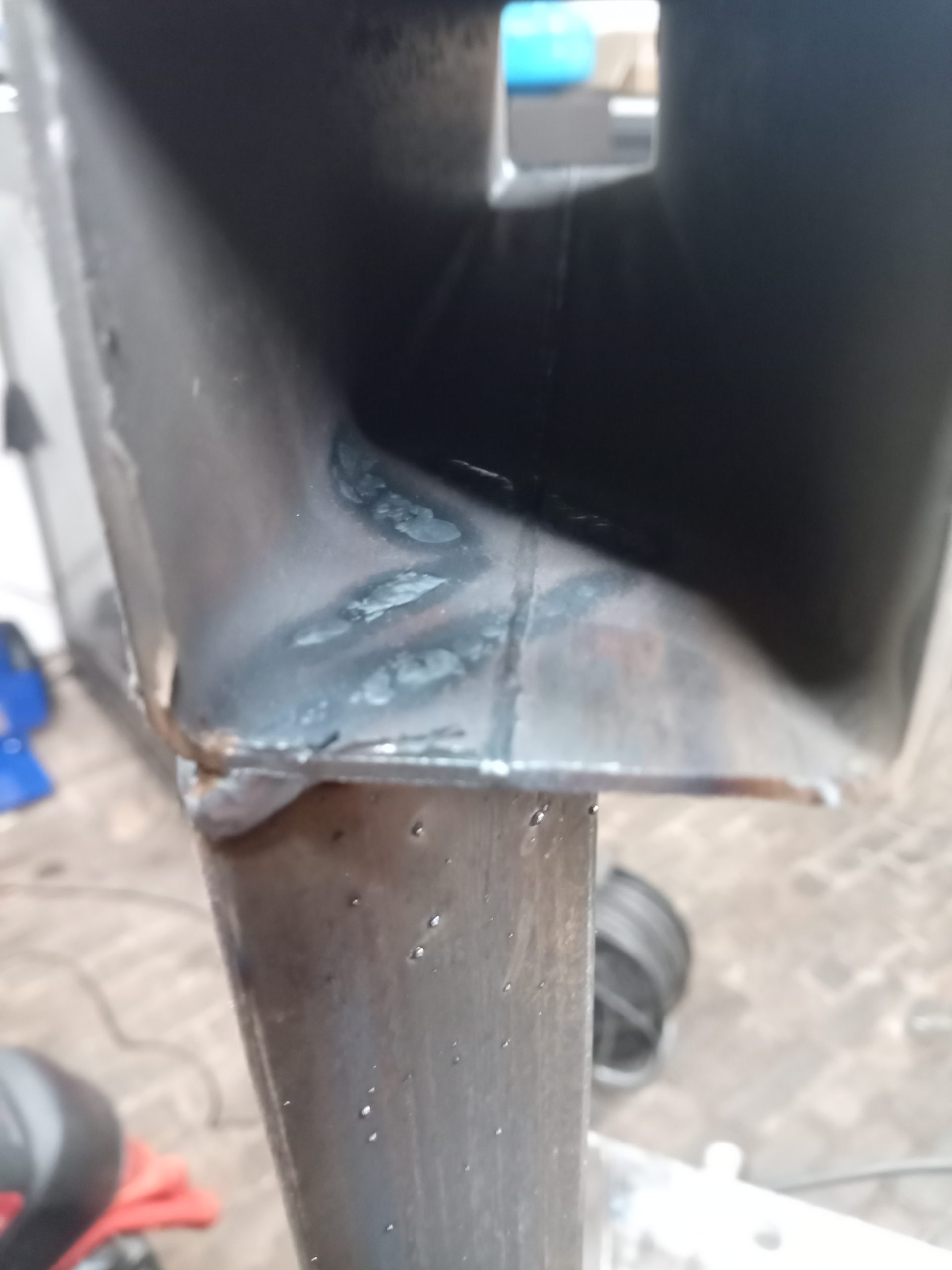
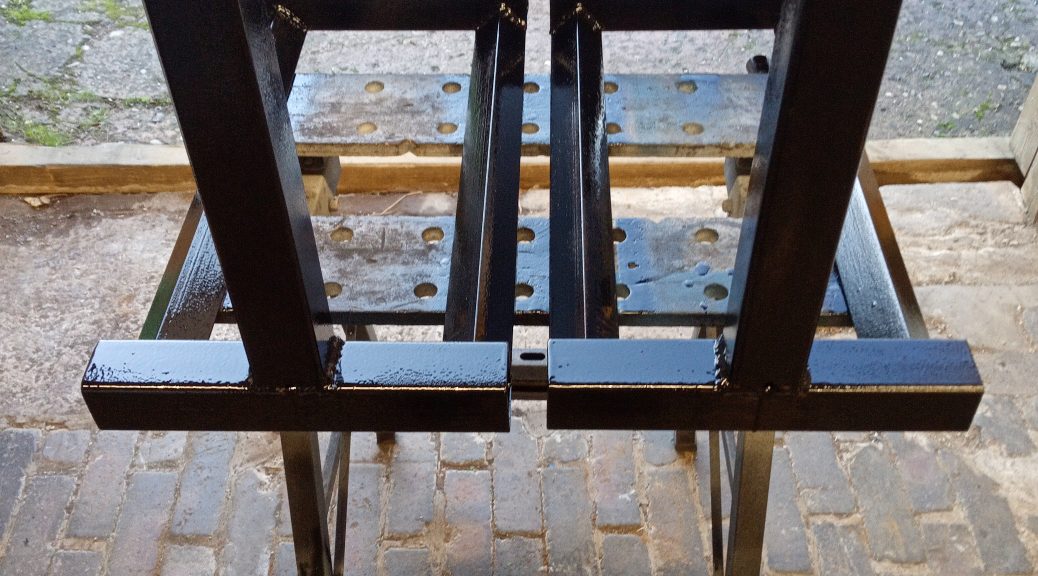
So, what have I been up to in November, well the only thing radio related was fabricating more super heavy duty drive on antenna mast bases for two friends who liked mine so much and wanted their own. The cost to them, at mates rates, was £25 each, which included all the materials, cutting, welding, spray painting and delivery to the club.
Both of these were the 16″ / 17″ wheel diameter, ie the box sections were cut at 300mm, 300mm, and 400mm for the upright. For cutting instructions to make your own, click here.
Here are some pictures…